Psychology Education Standards & Frameworks

Clear Standards for High-Quality Psychology Education

NCPES standards describe what good psychology education looks like in practice – from curriculum design and supervised placements to assessment, student support, and quality assurance.

How Institutions Use NCPES Standards
  • Designing and revising psychology curricula and pathways.
  • Aligning supervised practice and clinical training requirements.
  • Assuring assessment quality and graduate capabilities.
  • Preparing for accreditation, recognition, and external review.

The NCPES Standards Framework

A structured model linking graduate capabilities, program outcomes, and institutional quality systems.

The NCPES Standards Framework is organised into domains that reflect key aspects of psychology education. Each domain includes principles, detailed standards, and examples of evidence that institutions can use to demonstrate alignment.

The framework is designed to be flexible enough to apply across national systems while remaining specific to the discipline of psychology and its ethical responsibilities.
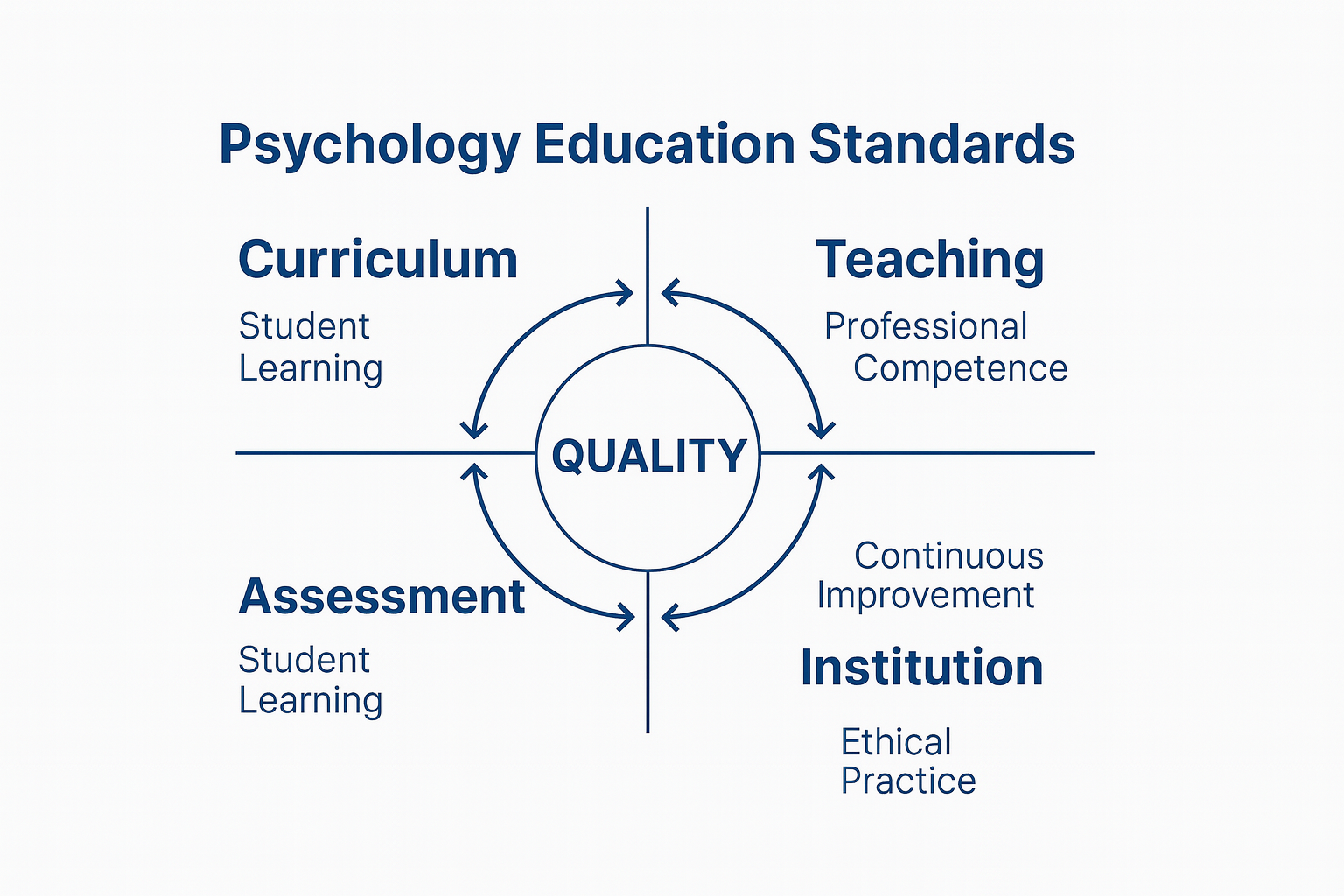
NCPES psychology education standards diagram

Domains of the NCPES Standards

Each domain focuses on a critical area of psychology education quality.

Curriculum & Learning Outcomes

Structure, sequencing, and coherence of the curriculum, including alignment with graduate attributes and discipline benchmarks.

Teaching, Learning & Supervision

Quality of teaching approaches, supervision models, staff expertise, and inclusive learning environments.

Assessment & Feedback

Valid, reliable, and fair assessment methods that support student learning and confirm achievement of outcomes.

Practice Education & Placements

Design and oversight of practice learning, including client safety, supervision, and integration with academic learning.

Student Experience & Wellbeing

Support structures, inclusion, and mechanisms for student voice and responding to concerns.

Governance & Quality Assurance

Oversight, data use, risk management, and continuous improvement processes for psychology programs.

Standards by Level of Study

While core domains are shared, expectations vary across undergraduate, postgraduate, and professional training programs.

Foundations of the Discipline

Undergraduate standards emphasise broad coverage of core psychology knowledge, research methods, and introductory skills in ethical practice and scientific thinking.

  • Alignment with recognised undergraduate psychology curricula.
  • Progressive development of research literacy and critical thinking.
  • Opportunities to explore applied and interdisciplinary areas.
Example indicators
  • Curriculum map showing coverage of core domains.
  • Sample assessment briefs demonstrating scaffolded learning.
  • Student feedback on engagement and academic support.

Advanced Knowledge & Specialisation

Postgraduate standards focus on deeper engagement with theory, research, and specialised applied fields of psychology.

  • Clear learning outcomes for advanced conceptual understanding.
  • Substantial research components or thesis work.
  • Attention to interdisciplinary collaboration and leadership skills.
Example indicators
  • Examples of thesis or capstone project supervision models.
  • Rubrics for advanced research and practice assignments.
  • Graduate destination data and alumni feedback.

Preparation for Professional Practice

Standards for professional and clinical programs emphasise supervised practice, client safety, ethical decision-making, and readiness for registration or licensure pathways.

  • Defined competency frameworks and practice outcomes.
  • Structured placement arrangements and supervision models.
  • Formal mechanisms for managing risk, complaints, and fitness to practise.
Example indicators
  • Practice education handbooks and supervision agreements.
  • Placement quality monitoring reports and site evaluations.
  • Evidence of collaboration with employers and regulatory bodies.

Standards in the Quality Cycle

NCPES standards are embedded across planning, delivery, review, and enhancement.

1
Plan

Use standards to design or revise programs, define outcomes, and align resources and staffing.

2
Deliver

Implement teaching, supervision, and assessment in ways that reflect agreed standards and principles.

3
Review

Use evidence and feedback to evaluate performance against each domain of the standards.

4
Enhance

Agree targeted improvements, monitor impact, and share practice across departments and partners.

Evidence & Indicators

Examples of the types of evidence institutions use to demonstrate alignment with NCPES standards.

Program specifications, module outlines, assessment briefs, marking criteria, moderation reports, and examples of feedback to students.

Placement agreements, supervision policies, practice assessment tools, risk management procedures, and site evaluation reports.

Student survey results, progression and completion data, graduate destinations, and records of how feedback leads to change.

Committee terms of reference, minutes, policies, risk registers, annual monitoring reports, and responses to external examiners or reviewers.

Ready to align your programs with NCPES standards?

Our team can support you to map existing provision, identify strengths, and plan enhancements using the NCPES Standards Framework.